
Essential Developer Tools Boosting Productivity in 2026
The developer landscape continues to evolve at a rapid pace, with new tools emerging to simplify coding, testing, deployment, and collaboration. In 2026, the focus has shifted toward AI‑augmented workflows that reduce boilerplate, catch bugs early, and enable seamless teamwork across distributed teams.

One of the most talked‑about categories is AI‑powered coding assistants. Building on the success of GPT‑5 Turbo and similar models, tools like Codex‑X and Gemini Code Assist now offer real‑time code generation, refactoring suggestions, and even automated test generation. Developers report up to a 30 % reduction in time spent on routine tasks, allowing them to focus on higher‑level design and problem solving.

Collaboration platforms have also evolved beyond simple chat and file sharing. Integrated development environments now embed live code sharing, real‑time debugging sessions, and AI‑driven code review directly into the workspace. Platforms such as DevHub and Syncode allow teams to work on the same codebase simultaneously, with conflict‑base simultaneously, see each other's cursors, and resolve merge conflicts with AI suggestions.

Testing and quality assurance have benefited from intelligent test generation and continuous feedback loops. Tools like TestGen AI analyze code changes and automatically produce unit, integration, and performance tests, while services such as Watchdog CI provide instant feedback on build health, security vulnerabilities, and performance regressions.

Containerization and orchestration remain foundational, but newer tools simplify the experience. Platforms like PodDesk offer a visual interface for managing Kubernetes clusters, while lightweight alternatives like MicroKube enable rapid prototyping without the overhead of a full cluster. These tools lower the barrier for developers to experiment with microservices and serverless architectures.
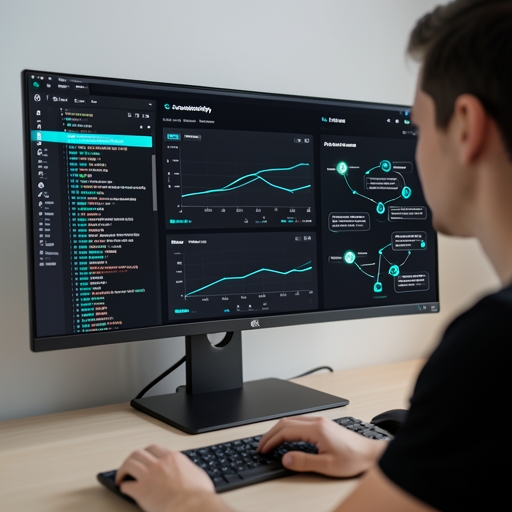
Observability has become more accessible thanks to unified telemetry platforms that combine logs, metrics, and traces into a single dashboard. Solutions such as Observo provide AI‑driven anomaly detection, helping teams spot issues before they impact users. The integration of these insights directly into the IDE allows developers to diagnose problems without leaving their editor.

Finally, learning and skill‑building tools have embraced personalized, AI‑driven pathways. Platforms like SkillForge adapt to a developer’s current stack, project goals, and learning pace, recommending tutorials, micro‑projects, and coding challenges that keep skills sharp and up‑to‑date.
Together, these tools are reshaping how developers write, test, deploy, and maintain software. By embracing AI‑augmented assistants, collaborative environments, intelligent testing, streamlined DevOps, unified observability, and adaptive learning, teams can deliver higher quality software faster than ever before.


