
Latest AI News: Breakthroughs Shaping Technology in 2026
The AI landscape continues to evolve at a breathtaking pace, and 2026 has already delivered a series of headline‑making developments that promise to reshape how we work, create, and interact with technology. From the launch of next‑generation foundation models to fresh regulatory frameworks, here’s a roundup of the most noteworthy AI news you need to know.

One of the biggest stories this month is the release of OpenAI’s GPT‑5 Turbo, a model that pushes the boundaries of reasoning and multimodal understanding while maintaining a surprisingly low inference cost. Early benchmarks show significant improvements in code generation, scientific reasoning, and long‑context comprehension, making it a strong contender for both enterprise applications and individual developers looking for a powerful yet accessible AI assistant.
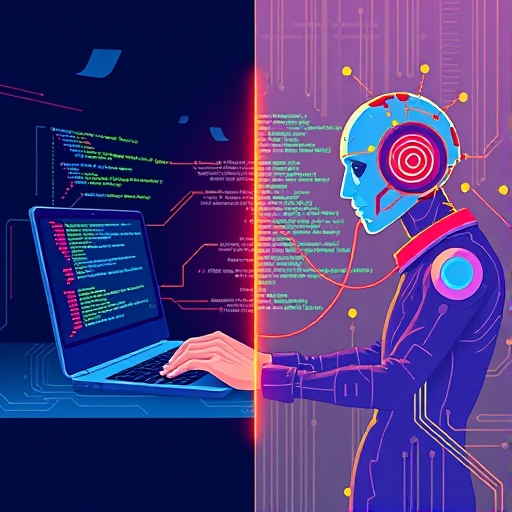
Meanwhile, Google DeepMind unveiled Gemini 2.0, which introduces a novel "tool‑use" capability that allows the model to autonomously invoke external APIs, retrieve real‑time data, and perform multi‑step tasks without explicit prompting. Demonstrations highlighted its ability to book travel, analyze financial reports, and even debug complex software stacks, hinting at a future where AI agents act as true collaborators rather than mere responders.
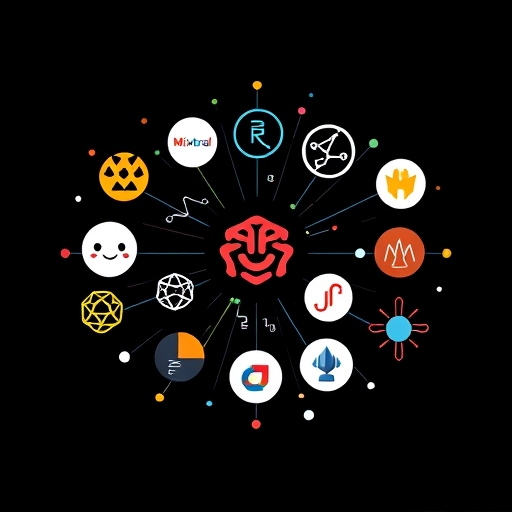
On the open‑source front, the Hugging Face community celebrated the launch of Mixtral‑8x22B, a sparse mixture‑of‑experts model that rivals proprietary counterparts in performance while being fully permissive for commercial use. The release sparked a wave of fine‑tuning experiments across domains such as legal document analysis, medical imaging, and low‑resource language translation, underscoring the democratizing power of open AI.

Ethics and regulation also took center stage. The European Union finalized the AI Act’s general‑purpose AI provisions, imposing strict transparency and risk‑assessment requirements on models trained with over a billion parameters. In the United States, the White House issued an executive order directing federal agencies to adopt AI risk‑management frameworks and to invest in AI‑ready workforce training programs.

Finally, consumer‑focused AI made waves with the introduction of personalized AI companions integrated into smart home devices. These companions leverage on‑device processing to learn user preferences, manage daily schedules, and provide contextual suggestions—all while keeping data locally stored to address privacy concerns.

As these developments unfold, the message is clear: AI is no longer a niche research topic but a foundational technology influencing every sector. Staying informed about the latest breakthroughs, understanding their implications, and experimenting with new tools will be key for anyone looking to thrive in the AI‑driven future.


