
Microsoft MAI vs Claude vs GPT: Build 2026 changed the AI race

Microsoft MAI vs Claude vs GPT: Build 2026 changed the AI race
Microsoft just announced seven new AI models at Build 2026, including a 1-trillion-parameter reasoning model trained from scratch. That's not a tweak — that's Microsoft saying it's done being OpenAI's reseller. If you use ChatGPT, Claude, or Copilot at work, the ground shifted in mid-June and you should know what it means for what you pay, what you get, and which app is actually the smartest in 2026.

What Microsoft actually announced on June 4, 2026
Seven models. One keynote. The headline is MAI-Thinking-1 — a 1T-total-parameter Mixture-of-Experts reasoning model with 35B active per token, trained on 33 trillion tokens with no distillation from another lab. Microsoft says they trained it from scratch in-house. That's a flex. It says "we are a frontier model lab now," not "we ship OpenAI's stuff with a Copilot sticker."
The other six matter less by name than by what they signal:
- MAI-Code-1-Flash — Microsoft's fast coding model, already shipped into GitHub Copilot. This is the one developers will notice first.
- MAI-Voice-1 and MAI-Vision-1 — multimodal pieces, rolling out across Microsoft 365 in waves.
- Three smaller specialist models targeting search, agents, and on-device use.
Claude is still the careful one
Anthropic's Claude family hasn't released a flagship since early spring, but the gap matters less than people think. I ran the same proofreading prompt through Claude, GPT-5.2, and Gemini 3 — a long edit with strikethrough deletions and bold insertions — and Claude was the only one that followed every instruction. ChatGPT changed some of my sentences. Gemini dropped the formatting halfway through. Claude did the boring thing I asked for, exactly.
That's not a vibe, it's the actual differentiator: Claude reads your instructions like a person who actually reads them. For long contracts, careful rewrites, anything where you need the model to do exactly what you said without improvising — Claude still wins.
The catch is the message cap and the price. Heavy users hit limits on Pro and Team plans within a week. Power users end up on Max or API, which gets expensive fast.
GPT-5.2 is the safe default
ChatGPT is still where most people land first, and on raw breadth it isn't going anywhere. The Similarweb numbers from January tell the story: ChatGPT traffic share fell from 86.7% to 64.5% over 12 months — but 64.5% of the AI-assistant market is still an enormous moat. People haven't left ChatGPT. They've added Claude and Gemini next to it.
GPT-5.2's strength is ecosystem: apps, Custom GPTs, voice mode, image generation, image understanding, memory, and that whole "plugged into everything" feeling. For someone who only wants to learn one tool in 2026, ChatGPT is still the answer.
Where it lost ground is in two narrow spots: instruction-following (Claude beats it) and audio/video analysis (Gemini 3 is better). If those don't matter to you, the boring advice is to stay put.
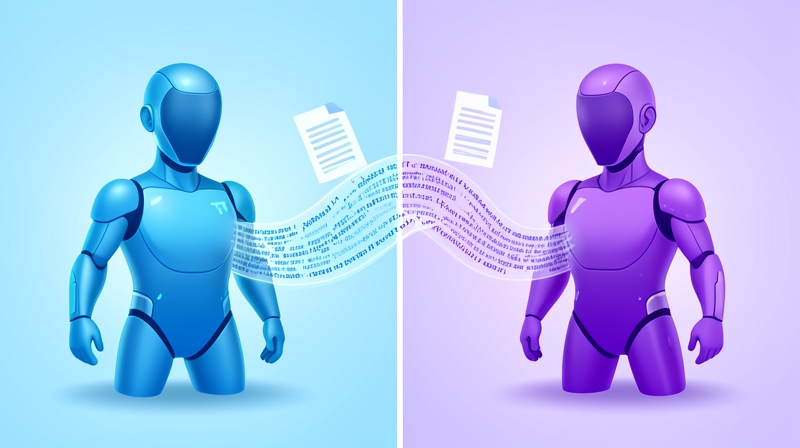
Microsoft Copilot is now its own animal
For most of 2024 and 2025, "Microsoft Copilot" basically meant "ChatGPT in a Microsoft skin." That changed at Build 2026. Copilot now runs MAI-Code-1-Flash for code, MAI-Voice-1 for voice, and a mix of MAI-Thinking-1 and OpenAI models depending on the task. Over the next six months Microsoft will route more workloads to first-party models as they hit parity on benchmarks.
What this means for you: if your company already pays for Microsoft 365 E3 or E5, Copilot is now actually good at code reviews, meeting recaps, and long Excel work — sometimes better than ChatGPT Plus, sometimes not, but good enough that you're not paying twice.
MiniMax M3 is the wild card
Same week as Build 2026, MiniMax announced M3 — a 1-million-token sparse-attention coding and agentic model. The context claim is the loud number, but the interesting bit is "agentic": MiniMax is positioning M3 as the model that can carry a long task across many steps without losing the thread. Open weights are promised soon. Until developers can actually run it locally, it's an open-weights promise more than a thing you can use today — but if it ships as advertised, it presses on every coding-tier product from Cursor to Copilot to Claude Code.
The short version — which one should you use in 2026?
Here's what I'd actually do, based on what these tools are for, not on hype:
- Claude — instruction-heavy writing, code review, careful rewrites. Best when the prompt matters more than the answer.
- ChatGPT (GPT-5.2) — general default, ecosystem, voice, memory, image gen. The "one tool to learn" choice.
- Gemini 3 — long-context docs, audio/video analysis, anything Google-flavored. Free tier is generous.
- Microsoft Copilot (MAI) — Office work, Teams recaps, GitHub Copilot coding. Best if you already live inside Microsoft.
- MiniMax M3 — wait and see on open weights; could matter for local coding agents by late 2026.
Is Microsoft MAI better than GPT-5?
On raw benchmarks, MAI-Thinking-1 is competitive with GPT-5.2 and Claude Opus on reasoning tasks, but most everyday users won't notice a difference. What matters is that Microsoft's apps will now prefer MAI under the hood — so your "GPT experience" inside Word is slowly becoming an "MAI experience."
Should I switch from ChatGPT to Claude in 2026?
Only if you're hitting instruction-following gaps daily. Most people don't. Add Claude as a second tool for the jobs ChatGPT struggles with (careful editing, long prompts) rather than replacing it.
Is MiniMax M3 real or vaporware?
The 1M-context claim is real and the open-weights promise is documented, but you can't run it today. Treat it as incoming competition, not a tool to switch to in June 2026.
Does Microsoft still pay OpenAI?
Yes — the partnership continues, and OpenAI models still ship across Azure. But the strategic shift is clear: Microsoft is building first-party frontier models in parallel, not as a replacement, and customers will see MAI increasingly surface inside Microsoft 365 and Copilot over the next year.
🏆 Final Verdict
Stop asking which model is "the best" — there's no single answer in 2026. Pick the tool for the job: Claude for careful work, ChatGPT for breadth, Copilot/MAI if you're inside Microsoft, Gemini for audio/video. The Build 2026 launch didn't crown a winner; it just made the choice more honest. Nobody needs to switch. Most people need a second tool.
I went into this thinking Microsoft had finally caught up. Came out thinking Microsoft has built something genuinely different — not because MAI-Thinking-1 is smarter than GPT-5, but because Microsoft controls the distribution now. Apps matter more than benchmarks. Whichever model rides inside the apps you already pay for wins in the long run, regardless of how it scores on paper.
#MicrosoftMAI
#Build2026
#AIAssistants2026


