
NVIDIA RTX Spark laptops: what they mean for shoppers in 2026

NVIDIA just walked onto Apple's turf. At Computex 2026 in Taipei this June, Jensen Huang pulled the wraps off the RTX Spark — NVIDIA's first real consumer laptop chip — and the announcement has spent the last two weeks quietly rewriting every laptop buying guide for the back-to-school season. If you've been sitting on a laptop upgrade, hold off for a minute. Here's what's coming, what's not, and whether it's actually worth waiting for.
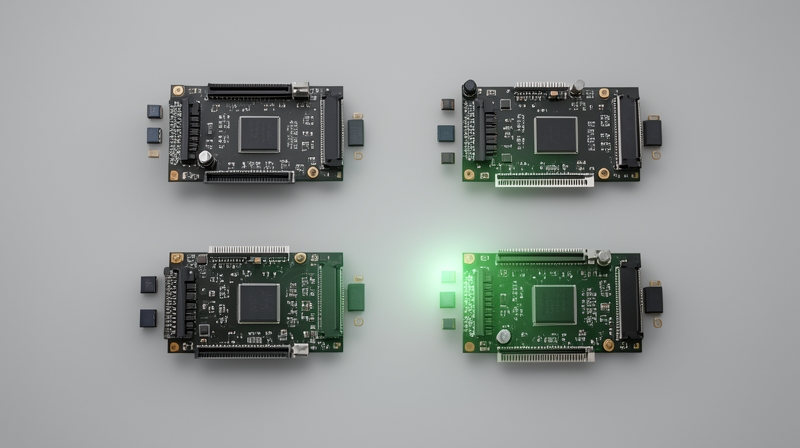
What NVIDIA actually announced at Computex
The RTX Spark isn't a chip you'd typically expect from a company that built its fortune on data-center GPUs. It's a full Windows laptop SoC — CPU, GPU, and AI accelerator on one die — co-designed with MediaTek. Jensen Huang called it "as big a deal as the reinvention of the phone into what we now know as the smartphone," which is the kind of line CEOs throw out when they need Wall Street to pay attention. But peel back the keynote, and the specs are genuinely unusual for the category.
The headline numbers
- 20-core CPU (mix of performance and efficiency cores — final split not yet published)
- Blackwell GPU with 6,144 CUDA cores — the same family that's in RTX 50-series desktop cards, and roughly equivalent to a discrete RTX 5070 in raw shader count
- Up to 128 GB unified memory — that's a workstation number, not a thin-and-light number
- Dedicated NPU for on-device AI workloads (Copilot+ class)
- DLSS 4.5 support out of the box, including frame generation on the integrated GPU
Dell, Lenovo, and ASUS have already signed on as launch partners. The first RTX Spark laptops land in stores around October 2026, which lines up awkwardly with the holiday shopping season — a few weeks of overlap, then a long tail into 2027.
RTX Spark vs the chips it's fighting against
Here's the thing nobody in the keynote audience wanted to say out loud: the laptop CPU market in 2026 is the most competitive it's been in a decade. NVIDIA isn't breaking into an empty field. They're checking into a hotel that's already full.
Apple M4 / M5 family
Apple Silicon has owned the "fast, quiet, all-day battery" category since 2020. M4 and the newer M5 chips deliver class-leading performance per watt, and every Mac running them has the same unified memory bandwidth advantage RTX Spark is trying to copy. Where NVIDIA wins: raw GPU compute and gaming. Where Apple wins: idle power draw, sleep behavior, and the software ecosystem is purely Apple's. If you live in Final Cut, Logic, or iOS-side apps, this comparison doesn't really matter — you're not switching.
Qualcomm Snapdragon X Elite
The first real Windows-on-ARM competitor. Snapdragon X Elite 2 launched earlier this year and brought genuine multi-day battery life to Windows for the first time. App compatibility has finally caught up — most of the things you actually use (Chrome, Office, Photoshop, Visual Studio Code) now ship native ARM builds. Where NVIDIA wins on Snapdragon is graphics. Snapdragon's integrated Adreno GPU is better than Intel's old Iris Xe, but it's not touching a Blackwell-derived GPU with 6,000+ CUDA cores. If you want one chip that plays Cyberpunk 2077 and runs Copilot without choking, RTX Spark has a real story.
Intel Lunar Lake (Core Ultra Series 2)
Intel's most credible attempt at catching up since Apple's M1 launch. Lunar Lake is genuinely efficient, has a usable NPU, and runs every x86 application ever written — which is still its biggest advantage. Where NVIDIA wins: every workload that loves GPU acceleration (Blender, DaVinci Resolve, ML training, games with ray tracing), and Intel's GPU is the weak link in the package. If your work is Office, browsers, and Zoom with the occasional Photoshop, Lunar Lake is fine and the laptops are cheap. If you push the GPU, NVIDIA wins decisively.
AMD Strix Halo / Ryzen AI 300
The dark horse. AMD's Strix Halo chip puts a workstation-class GPU in a laptop socket, and some of the rare Framework or ASUS ProArt models with it have shown absurd performance in creative workloads. Where NVIDIA wins: the CUDA software stack. If your workflow is PyTorch, Stable Diffusion, or any of the CUDA-only AI tools, NVIDIA-on-Windows just works. AMD's ROCm support on Windows is improving, but it's still not CUDA-level.
Who should actually wait for an RTX Spark laptop
Not everyone. I'd split it into three groups.
Wait for RTX Spark if: you do GPU-heavy creative work (video, 3D, motion graphics) and you've been stuck on a Mac because Windows laptops with real graphics were too heavy or too hot. RTX Spark Closes that gap for the first time. Same if you want to run local LLMs or Stable Diffusion on your laptop without buying an eGPU.
Buy a Lunar Lake or Snapdragon X laptop now if: you need a machine this month for school or work, your workload is mostly office + browser + video calls, and you don't want to pay early-adopter prices. A current-gen Snapdragon X Elite 2 thin-and-light will be lighter, quieter, and cheaper than the first RTX Spark models almost certainly will be.
Stay on whatever you have if: your current laptop does what you need. There's no reason to upgrade just because a new chip exists. Wait for the second generation, when prices settle and the driver quirks get ironed out — that's almost always the smarter move.
🏆 Final Verdict
RTX Spark is the most interesting laptop chip announcement of 2026 — not because it'll outsell Apple Silicon (it won't, not this year), but because it finally gives Windows a real answer to "but can it play games and run Blender without an eGPU?" If you've been stuck in Apple's ecosystem for creative work and want to come home, the wait is almost over. Everyone else can sit this generation out and grab one in 2027 when prices drop and the kinks get worked out.
FAQ
When do RTX Spark laptops actually go on sale?
NVIDIA says the first wave ships this autumn — that means sometime between late September and November 2026. Expect Dell, Lenovo, and ASUS to lead, with Razer and others following before the holiday quarter ends.
How much will an RTX Spark laptop cost?
NVIDIA hasn't released pricing, but the chip's specs put it squarely in the premium tier. Expect the first models to start around $1,599 and climb past $2,500 for higher-memory configs. The 128 GB unified memory option will almost certainly push models into $3,000+ territory.
Can RTX Spark run games?
Yes — that's actually one of its main selling points. The integrated Blackwell GPU supports DLSS 4.5, ray tracing, and frame generation, and early demos at Computex showed Cyberpunk 2077 running smoothly at high settings without a discrete GPU.
Should I get RTX Spark or a Snapdragon X Elite 2 laptop?
Depends what you do. If you want all-day battery and your work is Office + browser, Snapdragon X Elite 2 is the better buy right now — the laptops are lighter, cheaper, and ARM app compatibility has matured. If you want to play games or run GPU-accelerated creative apps on Windows, wait for RTX Spark.
#RTXSparkLaptop
#NVIDIARTXSpark
#AILaptop2026
#Computex2026


